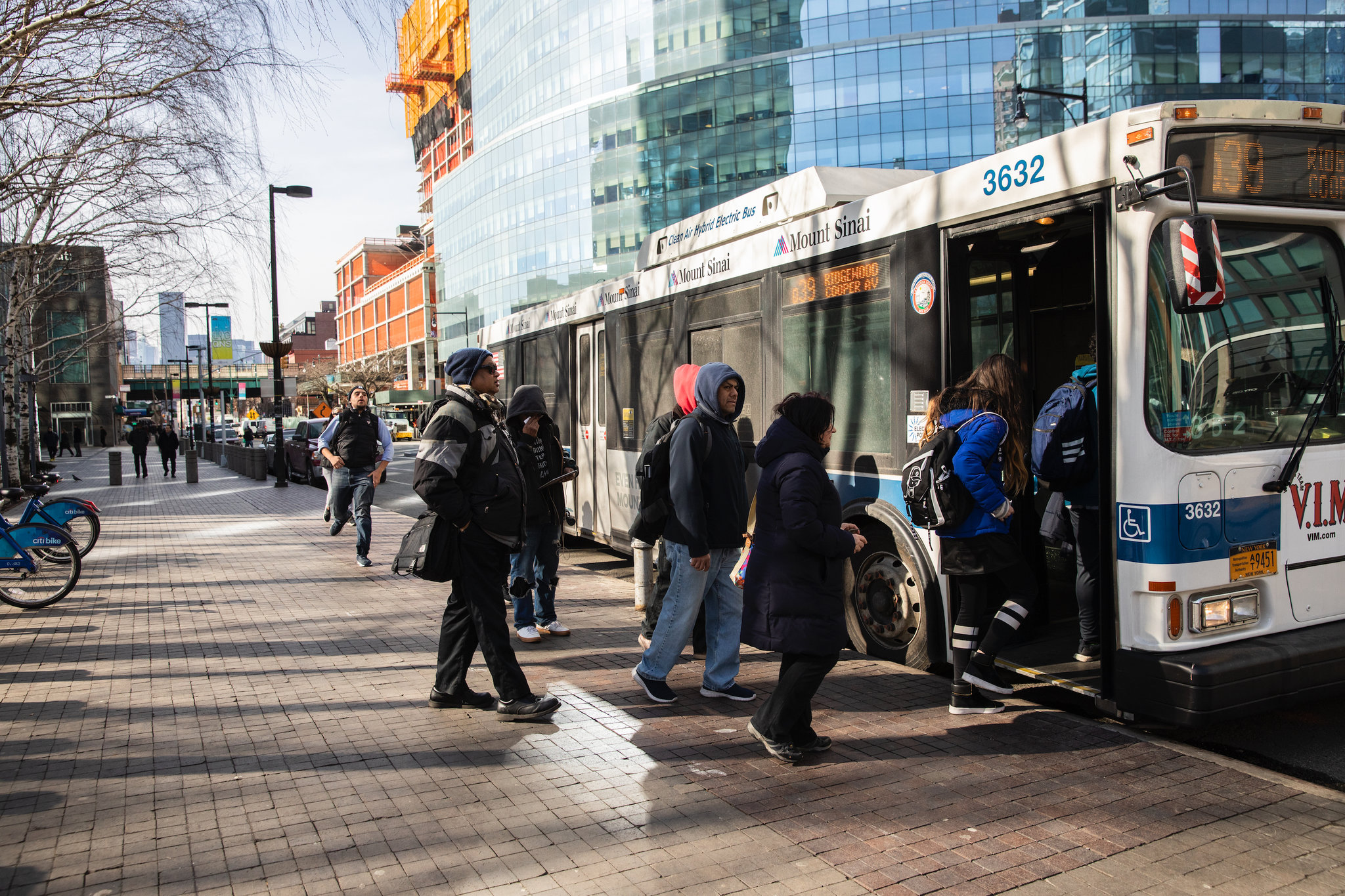
NYC bus riders are sending a clear message to city leaders: speed and reliability matter more than free fares.
As New York City debates plans to eliminate bus fares under Mayor Zohran Mamdani’s proposed “fast and free” transit agenda, many daily commuters say dependable service is their biggest concern. Riders across the city are calling for buses that arrive on time, move faster through traffic, and provide safer travel options.
The debate highlights the growing pressure on city officials to balance affordability with the realities of operating one of the largest public transport systems in the United States.
NYC Bus Riders Prioritize Reliability
Commuters interviewed along the busy M15 Select Bus route shared similar frustrations about delays, missed arrivals, and inconsistent service.
Many riders said they would rather continue paying fares if it meant buses remained reliable and efficient.
One-third of city buses reportedly fail to arrive on schedule, while many high-frequency routes suffer from “bunching,” where buses arrive unevenly and create long waiting times for passengers.
For workers, students, parents, and elderly residents who rely on buses daily, predictable travel times are often more valuable than saving a few dollars.
Free Fare Debate Divides Commuters
Mayor Mamdani’s administration hopes to eventually eliminate fares on all of New York City’s more than 300 bus routes.
Supporters argue that free buses would improve affordability, increase mobility, reduce fare enforcement conflicts, and help low-income residents access work, education, and healthcare more easily.
However, many NYC bus riders remain skeptical.
Several commuters interviewed said they believe completely free buses could slow service even further by increasing overcrowding and operational pressure.
The city previously experimented with fare-free bus routes in 2023. While ridership increased, the pilot programs also raised costs and contributed to slower service on some lines.
The Cost of Free Buses
Transportation officials estimate that bus fares currently generate more than $650 million annually to support the city’s transit system. Eliminating fares entirely could cost over $700 million each year.
At the same time, transit experts argue that improving bus lanes and reducing traffic congestion could deliver faster results at a much lower cost.
Dedicated bus lane projects are estimated to cost roughly $123 million, significantly less than fully subsidizing free transit.
The financial debate has become a major issue for city leaders already facing pressure over housing, childcare, and living costs.
Safety Concerns Shape Rider Preferences
Many commuters also say buses feel safer than the subway system.
Passengers interviewed described buses as cleaner, less crowded, and more comfortable, especially for women, students, and older residents traveling across the city.
Public transit data also shows fewer reported crimes on buses compared to subway networks.
At the same time, fare evasion remains a controversial topic.
Some riders argue that widespread fare skipping already makes buses effectively free for many passengers, while others worry that reduced enforcement could weaken service quality and increase disorder.
City Hall Pushes Forward With Transit Plans
Despite mixed reactions, City Hall insists it can achieve both faster and fare-free transportation.
The administration is already redesigning bus routes, building new bus lanes, and upgrading traffic systems to improve commute times across the city.
Officials say projects connected to LaGuardia Airport and major travel corridors will help speed up journeys ahead of major international events, including the FIFA World Cup.
Elizabeth Adams, the city’s newly appointed “free and fast bus czar,” said the administration remains committed to delivering both affordability and reliability for residents.
Why This Matters
Public transportation remains essential for millions of New Yorkers, especially lower-income workers and residents living outside major subway corridors.
The debate over free buses reflects broader national discussions about affordability, urban mobility, and infrastructure investment in large cities.
As transit systems struggle with rising costs and changing commuter habits, city leaders are under pressure to modernize services without sacrificing reliability.
What Happens Next
New York City is expected to continue expanding dedicated bus lanes and redesigning major routes throughout 2026.
State lawmakers and transit agencies will also continue debating how to finance any future fare-free bus system.
For many NYC bus riders, however, the priority remains simple: buses that arrive on time, move quickly, and provide safe daily transportation across the city.