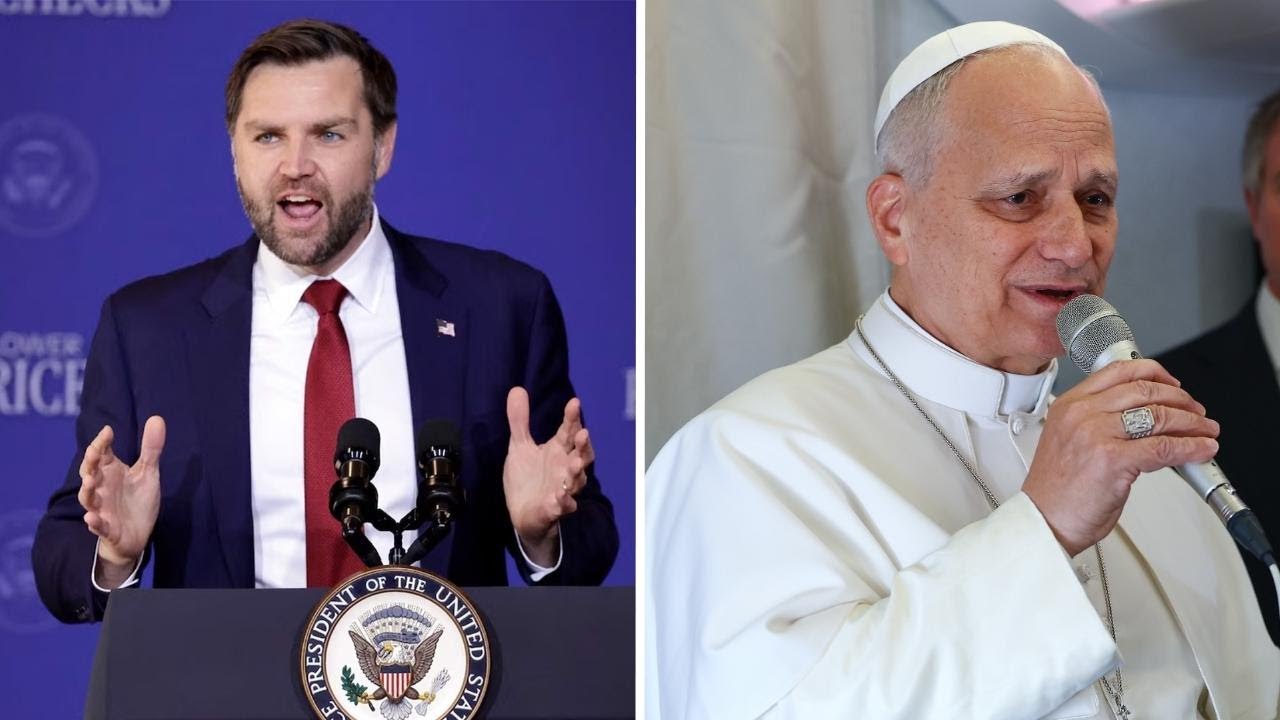
The Vance pope comments have intensified debate over the role of religious leaders in political affairs. Specifically, Vice President JD Vance said the pope should avoid involvement in U.S. policy matters. As a result, his remarks come amid rising tensions between President Donald Trump and Pope Leo XIV.
Speaking on Fox News, Vance argued that the Vatican should focus on internal church matters. At the same time, he stressed that American political decisions should remain the responsibility of elected leaders. Consequently, the Vance pope comments have drawn attention across both political and religious circles.
Vance framed the disagreement as a natural conflict between institutions. In his view, differences between political leadership and the Vatican are expected. Therefore, he downplayed the significance of the dispute and described it as manageable.
Meanwhile, the remarks follow recent criticism from President Trump directed at Pope Leo XIV. For instance, the president accused the pontiff of being weak on crime. In addition, he questioned the pope’s stance on global issues. As a result, these statements have widened the divide between the administration and the Vatican.
The Vance pope comments also reflect his personal background. Notably, he converted to Catholicism in 2019 after studying with Dominican friars. However, his policy positions, especially on immigration, have placed him at odds with many Catholic leaders.
At the same time, senior figures within the American Catholic Church have voiced strong opposition to current government policies. For example, some have criticized deportation measures and broader immigration strategies. In one case, a Catholic group successfully challenged restrictions on providing communion to detained migrants.
Furthermore, religious leaders have also weighed in on foreign policy. In a televised interview, prominent cardinals questioned the moral justification of U.S. military actions. They also criticized public messaging that appeared to trivialize the human cost of conflict.
The Vance pope comments come at a time of heightened geopolitical tension. Recently, diplomatic efforts involving Iran have failed to produce a lasting agreement. Meanwhile, Pope Leo XIV has remained a vocal critic of the conflict. He has also rejected claims that it carries religious justification.
In response, the pope emphasized the importance of speaking openly about moral issues. He stated that his role requires him to address global concerns through faith. Therefore, this stance places him in direct contrast with calls for restraint in political discourse.
Despite the disagreement, Vance adopted a measured tone when discussing the pope. On one hand, he acknowledged that religious leaders have the right to advocate for their values. On the other hand, he maintained that policy decisions must remain within the authority of elected officials.
Historically, the debate echoes long-standing tensions between religion and governance in the United States. For instance, past leaders have argued for a clear separation between church authority and public policy. As a result, this principle continues to shape discussions around the Vance pope comments today.
In addition, the issue has intersected with broader controversies. Recently, President Trump faced criticism over a social media post featuring an AI-generated image. Although he later clarified the intent and removed the post, the episode added to scrutiny of the administration’s messaging.
Overall, the Vance pope comments highlight a deeper question about influence and authority. Should religious leaders speak on political matters, or should they remain focused on spiritual guidance? While opinions differ, the debate continues to evolve.
Ultimately, the exchange underscores the complexity of modern leadership. As political and religious institutions intersect, tensions will likely persist. Therefore, the balance between moral advocacy and political authority will remain a central issue.