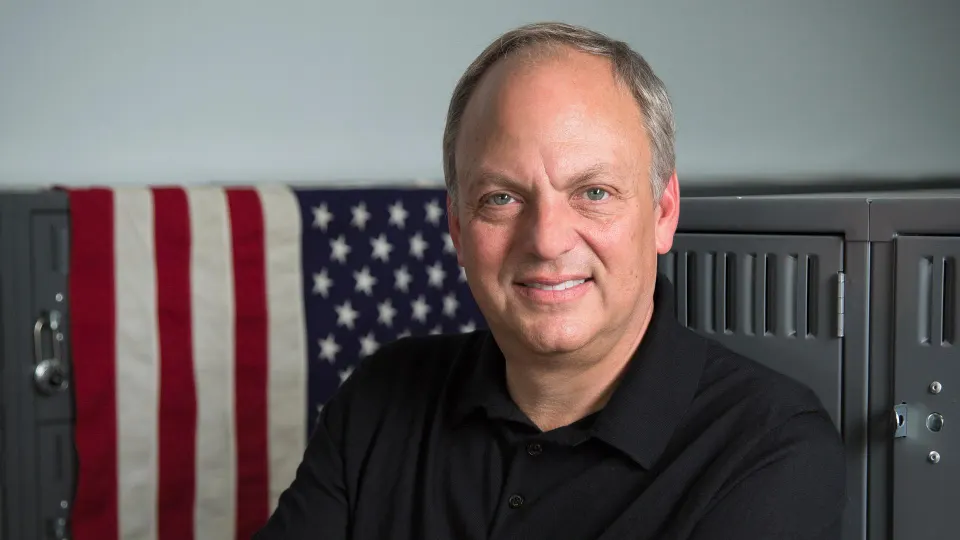
David MacNeil, founder and CEO of WeatherTech, has earned a nomination from President Donald Trump to serve on the Federal Trade Commission (FTC). Importantly, this move aligns with his public push for stricter “made in USA” labeling—especially for online goods.
MacNeil’s net worth exceeds $4 billion. Moreover, he built WeatherTech into an $800 million private company. The firm makes car mats, pet bowls, and sun shades—all in the U.S. Specifically, all 11 factories sit in Illinois, and every material comes from American suppliers. “We extrude our own plastic,” he says. “We design and build our own molds.” In addition, the company even handles employee meals and lawn care in-house.
Notably, his advocacy began well before this nomination. In December, he told Forbes that online shoppers lack clear origin information. “American consumers are being deceived,” he said. Therefore, he called for new rules through Congress, an executive order, or the FTC.
However, his claims simplify reality. Current laws do require country-of-origin labels—but only for certain products. While the FTC and Customs and Border Protection enforce these selectively, his message still fits today’s pro-manufacturing mood.
Crucially, Trump admires MacNeil’s stance. Years ago, at a donor lunch, Trump asked why he didn’t make products in China. MacNeil replied that creating American jobs mattered more than extra profit. Unsurprisingly, Trump liked that answer.
Now, if confirmed, MacNeil could help write the very rules he champions. The FTC polices consumer fraud and unfair business practices across nearly every industry. For example, it has fined companies like Williams-Sonoma for false “made in USA” claims—a precedent that could benefit WeatherTech.
Nevertheless, ethics experts warn of conflicts. Richard Painter, a former White House ethics lawyer, says appointees should avoid voting on issues they recently lobbied for. “It doesn’t look good,” he notes.
In response, MacNeil disagrees. “I won’t do anything that won’t benefit all people,” he states. Accordingly, he promises to recuse himself from any WeatherTech-related matters. Furthermore, he plans to step back from daily operations if confirmed.
Meanwhile, WeatherTech benefits from current trade policies. Since 95% of its sales happen in the U.S., it avoids most export tariffs. Although industry margins dropped under Trump’s 2025 auto tariffs, WeatherTech’s fell just 2%. This is because domestic sourcing and strong pricing helped buffer the hit. “We’re getting a larger slice of a shrinking pie,” MacNeil says.
Additionally, his marketing leans heavily on patriotism. Super Bowl ads, Chicago billboards, and golden retrievers tracking mud in clean cars have built a powerful brand. As a result, Brand Keys ranked WeatherTech the 24th most patriotic U.S. brand in 2025.
Originally, MacNeil was born in Canada but moved to Chicago as an infant. His immigrant mother taught him hard work. Early on, he pumped gas for $3 an hour. Later, he drove taxis, worked as a machinist, and sold cars. Eventually, he launched WeatherTech in 1989 after seeing effective rubber mats in Scotland.
To get started, he mortgaged his house for $50,000 to buy his first shipment. Consequently, sales took off fast. Early TV ads showed coffee spills and muddy paws in new cars. Within a month, sales jumped 250% in test markets.
Today, as he prepares for Senate confirmation, MacNeil stays focused on his mission. “If we can’t manufacture things, we’re lost as a society,” he says. Ultimately, his FTC role could turn that belief into national policy—even if it means regulating the industry he built.
READ: Trump Declares End of U.S.-Led Global Order in Davos Speech