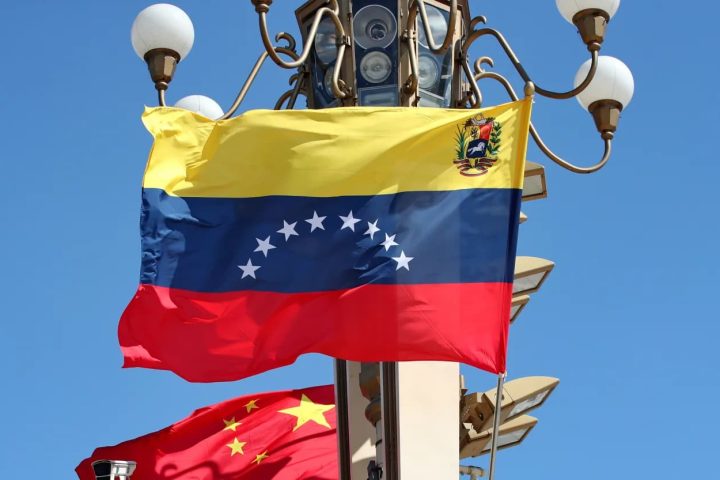
President Donald Trump signed an executive order declaring a national emergency to prevent U.S. courts or private creditors from seizing Venezuelan oil revenues currently held in U.S. Treasury accounts. This unprecedented legal move, titled “Safeguarding Venezuelan Oil Revenue for the Good of the American and Venezuelan People,” creates a legal “firewall” around these funds, which have been a critical source of revenue for the Venezuelan government and an important tool for the U.S. to exert influence over the country’s troubled political landscape. The order emphasizes that the oil proceeds, while the sovereign property of Venezuela, will remain in U.S. custody for strictly custodial purposes, to avoid the threat of judicial action that could undermine U.S. national security objectives.
The declaration underscores the Trump administration’s ongoing efforts to shape U.S. foreign policy in Latin America, particularly in relation to Venezuela, by ensuring the oil revenues are used exclusively for reconstruction efforts and humanitarian support, rather than being diverted or seized by creditors or competing foreign powers. By securing these oil proceeds, the U.S. aims to exert greater control over the reconstruction of Venezuela’s oil industry and prevent foreign adversaries like China and Russia from capitalizing on Venezuela’s natural resources.
The National Emergency: Protecting Venezuelan Oil Proceeds
President Trump’s executive order is a clear demonstration of the U.S. government’s desire to manage Venezuelan oil revenues and use them as leverage in its broader efforts to address Venezuela’s political and economic crises. The funds, derived from Venezuela’s oil sales, are currently deposited in Foreign Government Deposit Funds within U.S. Treasury accounts. According to the order, these funds will be safeguarded and shielded from any attachment, lien, garnishment, or judicial action unless explicitly authorized by the U.S. government.
In his official statement, President Trump framed the preservation of these oil revenues as crucial for U.S. national security, highlighting that the funds must be preserved to support U.S. goals in the region, such as stabilizing Venezuela, curbing illegal immigration, and countering the flow of deadly narcotics into the United States. “The preservation of the Foreign Government Deposit Funds is of the utmost importance to the United States,” Trump wrote, asserting that judicial attachment of these funds would present an “unusual and extraordinary threat” to U.S. national security interests.
Sovereign Ownership and U.S. Custodianship of Oil Revenues
Under the executive order, the funds held by the U.S. remain the sovereign property of Venezuela, but the U.S. is tasked with holding them strictly in a custodial capacity. This means that these revenues are not to be used for U.S. commercial purposes nor are they subject to legal claims or actions that would typically apply to U.S. assets. The order effectively positions the U.S. as the custodian of Venezuela’s oil assets while ensuring they are protected from creditors seeking to settle claims arising from asset nationalizations carried out by the Venezuelan government under former leader Hugo Chávez.
The Foreign Government Deposit Funds will not only remain under U.S. custody but will also be used solely for Venezuela’s reconstruction and stabilization efforts, which are aligned with U.S. foreign policy objectives. This legal arrangement signals a fundamental shift in how the U.S. handles foreign assets and is a strategic response to the ongoing crisis in Venezuela, which has been compounded by years of economic mismanagement, international sanctions, and political instability under Nicolás Maduro.
The Broader Strategic Context: U.S. Goals in Venezuela
The executive order is not an isolated move but part of a broader, multi-faceted strategy to influence Venezuela’s political future. By controlling the proceeds from Venezuela’s vast oil reserves, the U.S. government aims to guide the country’s reconstruction, help stabilize its economy, and provide humanitarian assistance to its people. These measures are part of the U.S. administration’s larger goal of reducing illegal immigration from Venezuela, which has surged in recent years, and combating drug trafficking that has contributed to the opioid crisis in the U.S.
In a fact sheet released by the White House, it was stated that the U.S. government’s actions—by safeguarding the oil revenues—are promoting “stability in Venezuela” and advancing key America First objectives: reducing illegal immigration, blocking the inflow of deadly narcotics, and countering malign foreign influence in the region. The U.S. sees Venezuela’s oil revenues as both a humanitarian tool and a geopolitical lever, making it an essential component of its foreign policy in Latin America.
This control over Venezuelan oil also serves a strategic countermeasure to other foreign powers, especially China and Russia, which have sought to increase their influence in Latin America, including by securing investments in Venezuela’s oil sector. The Trump administration’s decision to shield these revenues from legal actions ensures that the funds will remain under U.S. control and will be used for purposes that align with U.S. national interests, preventing foreign adversaries from exploiting the situation for their gain.
Oil Deals and Reconstruction: What’s Next?
A major part of the U.S. strategy involves using Venezuelan oil revenues to rebuild Venezuela’s crippled energy infrastructure. Chevron, Exxon Mobil, Shell, and ConocoPhillips—which have had longstanding arbitration claims against Venezuela for asset nationalizations under Chávez—are expected to play a significant role in restoring Venezuela’s oil production. Under the terms of the new agreement, these companies are set to invest at least $100 billion in rebuilding Venezuela’s oil sector, which has suffered from years of neglect and mismanagement.
The U.S. government is also directly involved in this process, ensuring that Venezuelan oil sales are handled through U.S.-controlled financial institutions. As part of this, the U.S. Treasury Department has already begun marketing Venezuelan crude globally through major traders and banks, with all proceeds from the oil sales first settling in U.S.-controlled accounts at globally recognized financial institutions. This setup ensures that Venezuela’s oil revenues are kept within U.S. jurisdiction, providing greater transparency and control over how the funds are spent.
The Legal and Political Implications of the Order
The legal implications of President Trump’s executive order are far-reaching. It prevents any attachment or garnishment of Venezuelan oil revenues by private creditors or foreign entities, which has long been a concern for U.S. oil companies and other stakeholders with claims against Venezuela. Major oil companies such as Exxon Mobil and ConocoPhillips have been fighting for years to recover billions of dollars owed by Venezuela as a result of asset expropriations under the Maduro regime. Trump’s executive order effectively protects these funds from being used to settle these arbitration claims, at least for the time being.
This protection is crucial for the U.S., as it preserves the political and economic leverage that oil revenues provide in the ongoing efforts to influence Venezuela’s political future. It also solidifies the U.S.’s role as the central player in Venezuela’s energy sector reconstruction, positioning it as both a financial benefactor and a key actor in the region’s geopolitics.
A Strategic Move for U.S. Security Interests
President Trump’s declaration of a national emergency to protect Venezuelan oil revenues held in U.S. custody is a bold and strategic move with significant implications for both U.S. national security and the future of Venezuela. By placing these funds off-limits to creditors and legal claims, the U.S. is exerting greater control over Venezuela’s oil assets, using them as a tool to promote stability, curb illegal immigration, and counter foreign influence in the Western Hemisphere.
As U.S. oil companies prepare to invest billions in Venezuela’s energy infrastructure, this executive order serves as a key mechanism to ensure that the oil revenues are used for reconstruction and humanitarian efforts, benefiting both Venezuela’s citizens and U.S. national interests. With Venezuela’s oil industry now under U.S. control, the Trump administration is taking a decisive role in shaping the future of the country, while also securing critical energy resources for the U.S. and its allies.