Corporate America is facing an unprecedented dilemma as tensions escalate around the Trump administration’s immigration enforcement policies. After the fatal shooting of ICU nurse Alex Pretti by Immigration and Customs Enforcement (ICE) agents in Minneapolis, business leaders have been forced to weigh the risks of publicly opposing the President’s actions. Many executives, previously silent on the issue, are now speaking out—albeit cautiously—against the actions of federal immigration agents. However, the fear of retribution from the White House and potential backlash from a divided public has caused a hesitation among many corporate leaders.
The Corporate Response to ICE’s Aggressive Tactics
Since President Donald Trump’s return to office, corporate leaders have mostly remained silent on his administration’s increasingly aggressive immigration policies. For months, as Trump ramped up immigration crackdowns, particularly in the state of Minnesota, top business figures have been reluctant to speak out. The silence was broken only after the fatal shooting of Alex Pretti, which forced CEOs to confront the growing tensions between business operations and federal immigration enforcement.
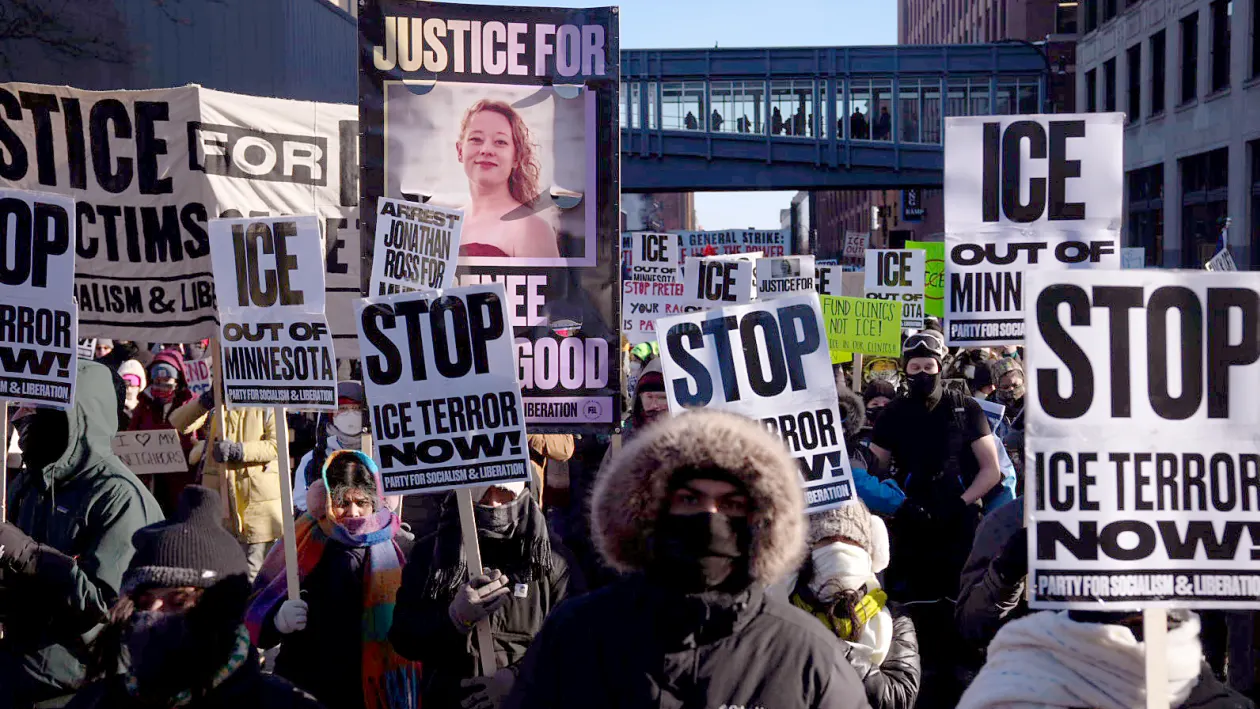
Minneapolis, home to some of the nation’s largest corporations such as Target, UnitedHealth, and 3M, has become a flashpoint in the debate. It was in this city that federal ICE agents increased their presence and clashed violently with protestors. In the aftermath of Pretti’s death on January 24, 2026, corporate leaders began to break their silence. Several Minnesota-based executives co-signed a letter calling for immediate de-escalation, though the letter made no direct mention of the President or his immigration policies. This cautious approach reflects the high stakes involved for businesses speaking out against the Trump administration.
The Dangers of Speaking Out
While the actions in Minneapolis have made it clear that business leaders are increasingly compelled to speak out, the fear of retaliation from the Trump administration looms large. According to Jeffrey Sonnenfeld, a professor at the Yale School of Management, business leaders are hesitant to go public with their opposition because they are acutely aware of the potential consequences. “They know that they will be shaken down, coerced, intimidated. Retaliatory gestures are quite severe,” he explained.
Under President Trump, corporations that have publicly opposed or criticized the administration have often faced punitive measures. These have included everything from lawsuits to regulatory scrutiny, as well as the loss of lucrative government contracts. With the President’s power to influence the market and make retaliatory moves, corporate leaders are understandably reluctant to speak out on controversial issues.
The Shift in Leadership Responses
Despite the significant risks, some corporate leaders have been more vocal in their criticism of Trump’s policies. Jamie Dimon, CEO of JPMorgan Chase, was among the first prominent business figures to openly criticize the administration’s immigration stance. Dimon called for a change in the U.S. approach to immigration, saying, “I think we should calm down a little bit on the internal anger about immigration.” Dimon’s comments came just days before Pretti’s death and highlighted the growing tension between corporate America and the Trump administration.
Following the tragic events in Minneapolis, other top executives have followed suit. Sam Altman, CEO of OpenAI, made public remarks condemning the actions of ICE, stating that it was the duty of Americans to “push back against overreach.” Apple CEO Tim Cook also expressed his sorrow over the violence in Minneapolis, stating that he was “heartbroken” and calling for de-escalation of the situation. However, like many of their peers, Cook and Altman avoided directly criticizing Trump or his immigration policies, choosing instead to speak in more general terms.
The Business Community’s Hesitation
The reluctance of business leaders to openly confront the administration is not just about fear of retribution; it also reflects the deeply polarized nature of American politics today. As Eli Yokley, a U.S. politics analyst, pointed out, many business leaders are cautious about alienating customers and stakeholders on either side of the political divide. In an era where consumer sentiment can be volatile, companies, particularly those that are consumer-facing, are hesitant to wade into politically charged issues.
Recent polling data underscores the divided nature of public opinion on corporate involvement in politics. A Morning Consult survey revealed that 40% of Americans believe CEOs who criticize Trump are acting responsibly, while only 28% think business leaders should speak out publicly when they disagree with the President. Meanwhile, the survey also found that 38% of respondents would view a company less favorably if a CEO praised Trump, while only 25% would view it more favorably.
Minneapolis: A Case Study in Corporate Dilemmas
Minneapolis has become a key battleground for corporate responses to federal immigration policies. The city’s large corporate presence, coupled with its recent history of protests and clashes between federal agents and demonstrators, has brought these issues to the forefront. While business leaders in the city have expressed concern over the violence and loss of life, they have been reluctant to take a strong stand against Trump’s immigration enforcement actions.
Target, one of the largest employers in Minneapolis, has been particularly cautious in its response. In 2020, following the killing of George Floyd, Target CEO Brian Cornell made a public statement condemning the death and calling for action in support of diversity and inclusion. However, when the deaths of Renee Good and Alex Pretti occurred in 2026, the company’s response was muted. Instead of a public statement, Target circulated internal memos acknowledging employee emotions but refraining from taking a firm stance on the ICE operations. This change in approach reflects the difficult balancing act that companies face when dealing with politically sensitive issues.
The Influence of Corporate Leaders on Policy
Despite their hesitation, corporate leaders wield significant power when it comes to influencing policy decisions. In the past, leaders of major companies have been able to sway political decisions, as seen when business figures in San Francisco successfully pressured Trump to cancel a planned ICE operation in the city. Corporate leaders have the resources and influence to effect change, but they must weigh the risks of speaking out.
Martha Bardwell, a local religious leader in Minneapolis, expressed frustration with the tepid corporate response, particularly from companies like Target. “It’s almost worse than silence, because it felt like nothing,” Bardwell said. “We know that if Trump is going to listen to anybody, corporate leaders have a lot of power.” She, along with other community leaders, has called on companies to take a stronger stance against the ICE operation, particularly given its impact on local residents and employees.
The Ongoing Challenge for Corporate America
As tensions continue to rise, the dilemma faced by corporate leaders is unlikely to abate. Business leaders must navigate the delicate balance between supporting their communities and maintaining favorable relationships with the administration. The Trump administration’s tendency to use political power as leverage against perceived adversaries has only added to the complexity of this issue. For now, many corporate leaders remain on the sidelines, carefully weighing the risks before taking a stand on one of the most divisive issues in modern American politics.