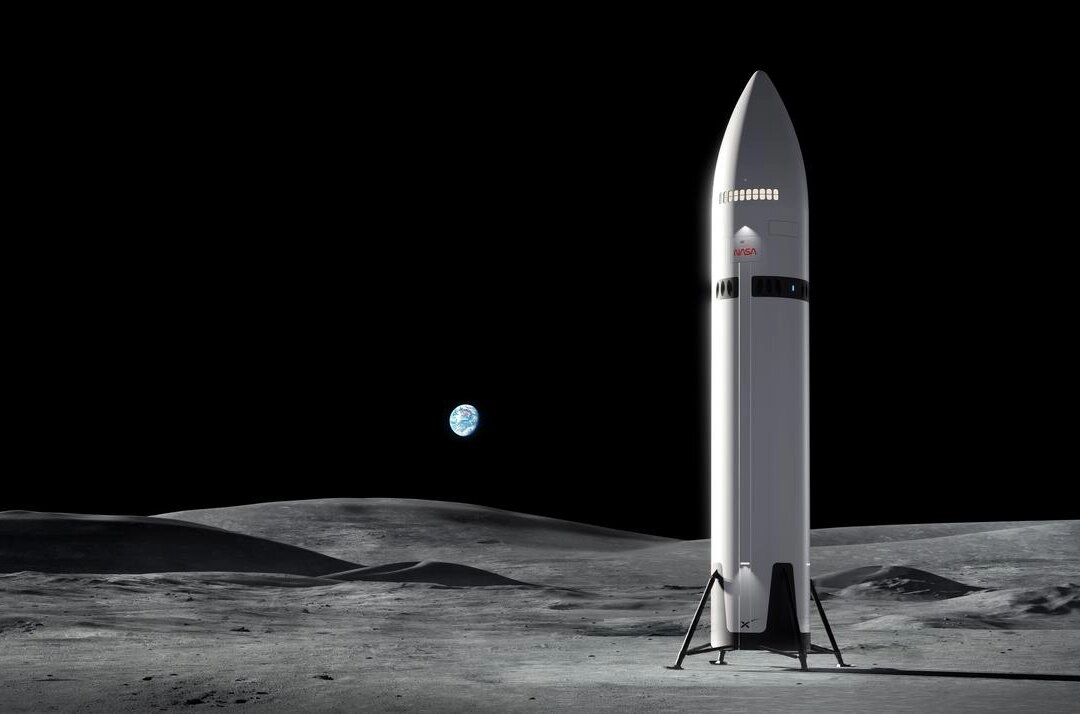
Elon Musk, the visionary founder of SpaceX, has revealed a significant shift in the company’s space exploration strategy. In a recent announcement, Musk stated that SpaceX’s immediate priority will now be focused on creating a self-sustaining city on the Moon, rather than its original plan of establishing a human colony on Mars. This new direction comes as Musk highlights the practicality of building on the Moon first, given its proximity and feasibility for quicker progress.
A Strategic Shift: Moon First, Mars Later
In a post on the social media platform X, Musk outlined the reasoning behind this pivot. According to Musk, while SpaceX’s long-term vision remains focused on spreading humanity to the stars, the Moon provides a far more accessible and viable location for the company’s initial efforts to establish a permanent human presence beyond Earth.
“SpaceX has already shifted its focus to building a self-sustaining city on the Moon, as we can potentially achieve that in less than 10 years, whereas Mars would take over 20 years,” Musk explained. He emphasized that the Moon’s proximity to Earth, with a two-day travel time compared to Mars’ six-month journey, allows for quicker development and iteration.
The Advantages of Lunar Exploration
Musk elaborated on why the Moon is the more logical next step for human civilization in space. One of the key advantages of lunar exploration, according to Musk, is the ability to launch missions more frequently. While trips to Mars are only feasible once every 26 months, based on planetary alignment, the Moon offers more frequent launch opportunities—every 10 days, allowing for faster progress and greater experimentation.
The prospect of a permanent lunar city is much closer to becoming a reality, Musk argues, due to the shorter trip times and the relative simplicity of missions to the Moon. He further explained that the Moon offers a more manageable environment to test critical technologies, such as life support systems, resource utilization, and sustainable habitats, all of which will be necessary for future Mars missions.
“This means we can iterate much faster to complete a Moon city than a Mars city,” Musk said, noting that establishing a base on the Moon is a crucial stepping stone toward his larger goal of space colonization.
SpaceX’s Commitment to Mars
Despite his renewed focus on the Moon, Musk did not abandon his vision of Mars colonization. He reaffirmed that SpaceX would still pursue its ambitions to build a city on Mars, with plans to begin working on this goal in the next five to seven years. While Musk acknowledged the challenges and long timeline involved in establishing a self-sustaining city on the Red Planet, he remains determined to make it happen.
“The Moon is a stepping stone,” Musk said, explaining that the lunar city will serve as a testing ground for technologies and systems that will eventually be deployed on Mars. “Once we have mastered living on the Moon, Mars becomes much more feasible.”
Aligning with U.S. Space Policy and Congressional Mandates
Musk’s announcement also aligns SpaceX with broader U.S. space exploration goals. One of the key mandates set by Congress is to return astronauts to the Moon by 2028 and to establish a sustained human presence either on the lunar surface or in lunar orbit. This directive is part of the Artemis program, NASA’s ambitious plan to send astronauts back to the Moon after more than 50 years.
Musk’s timeline for the Moon city coincides with these national goals, and SpaceX’s involvement in NASA’s Artemis missions further solidifies the company’s role in this historic effort. SpaceX has already been selected by NASA to develop a lunar lander for the Artemis III mission, scheduled for 2028. The Starship-based lunar lander will be used to transport astronauts to the Moon’s surface, marking the first crewed landing since the Apollo missions.
While SpaceX’s Starship and super-heavy booster projects have faced delays, Musk expressed confidence that the lunar lander will be ready in time to support the Artemis program. The company is well underway with the development of its lunar lander, and NASA’s decision to award SpaceX the contract for Artemis III has placed the company at the forefront of U.S. lunar exploration efforts.
Competing for Lunar Lander Spot
Despite the optimism surrounding SpaceX’s lunar ambitions, there have been setbacks along the way. In a surprising move, NASA reopened the competition for the Artemis III lunar lander contract, providing Blue Origin’s Blue Moon lander a chance to compete after SpaceX’s progress on Starship faltered.
Although the competition for the Artemis III lander has created uncertainty, Musk has remained confident that SpaceX’s lander will secure the spot. The SpaceX team is working diligently to finalize the design and testing phases, with a goal of meeting the demanding timeline for NASA’s crewed lunar landing.
Upcoming Milestones: Artemis II and the Moon Landing
While SpaceX focuses on building its lunar city, NASA’s Artemis II mission is set to launch in early March 2026. This uncrewed test flight of the Space Launch System (SLS) will be a crucial step toward the ultimate goal of returning astronauts to the Moon. The Artemis II mission will serve as a precursor to Artemis III, which will carry astronauts back to the lunar surface for the first time since Apollo 17 in 1972.
SpaceX’s involvement in Artemis II, particularly with its Starship-based lander, has positioned the company as a key player in the U.S. space program. However, the long-term vision for SpaceX remains focused on Mars, with Musk continuing to push for interplanetary travel and the eventual colonization of the Red Planet.
The Future of Space Exploration: The Moon as a Launchpad for Mars
Musk’s shift in focus to the Moon doesn’t mean that SpaceX is abandoning its Mars ambitions. Instead, it reflects a more pragmatic approach to space exploration—one that recognizes the importance of laying the groundwork for longer-term interplanetary goals. The Moon will serve as a critical testing ground for technologies that will be essential for survival on Mars, such as sustainable habitats, resource extraction, and life support systems.
By focusing on the Moon first, Musk and SpaceX aim to build the necessary infrastructure and knowledge base that will make Mars colonization possible within the next few decades. With frequent missions, faster iteration cycles, and closer proximity, the Moon presents a unique opportunity for SpaceX to pave the way for humanity’s expansion beyond Earth.
Conclusion: A Bold Vision for Humanity’s Future
Elon Musk’s vision for a self-sustaining city on the Moon is an ambitious and exciting development in the realm of space exploration. While Mars remains the ultimate goal, the Moon offers a more practical starting point for SpaceX’s spacefaring ambitions. With significant support from NASA, the U.S. government, and international space agencies, SpaceX is poised to lead the charge in building humanity’s first permanent off-world city.
As Musk continues to push the boundaries of space exploration, his focus on the Moon serves as a crucial step in making life on Mars a reality. Whether through lunar cities or interplanetary travel, SpaceX’s work will shape the future of space exploration for generations to come.