The NYC self-checkout bill is drawing sharp criticism after City Council Democrats proposed new rules for supermarkets and pharmacies in the name of fighting retail theft. Supporters say the measure would improve safety, accountability, and worker protections, but opponents argue it punishes customers and businesses instead of criminals.
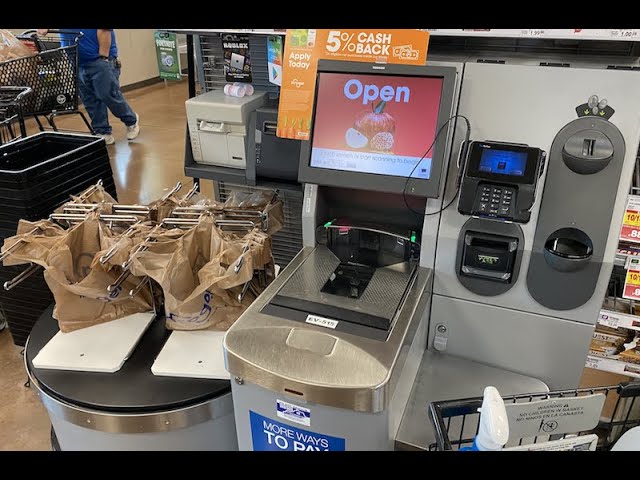
Under the NYC self-checkout bill, stores would have to limit shoppers to 15 items at self-checkout and assign at least one employee for every three kiosks. Critics warn the proposal could raise costs, slow shopping, and add new pressure on retailers already dealing with theft, higher labor expenses, and economic strain.
NYC self-checkout bill targets stores over shoplifters
The NYC self-checkout bill would require supermarkets and pharmacies to change how they run self-service lanes. Stores that fail to comply could face daily fines of at least $100.
Supporters of the proposal say the rules are necessary because self-checkout areas often have less supervision. They argue that fewer workers in these spaces can lead to more theft, lower safety, and weaker customer protection.
Councilwoman Amanda Farías, who introduced the legislation, says the measure is meant to protect jobs, support frontline workers, and make stores safer. She has also argued that the 15-item cap would improve accountability in the checkout process.
Still, the NYC self-checkout bill has quickly become controversial because many business owners and shoppers see it as the wrong answer to retail crime.
Critics say NYC self-checkout bill misses the real problem
Opponents of the NYC self-checkout bill say lawmakers are focusing on store operations instead of punishing shoplifters.
Critics argue that requiring more staff at self-checkout will not stop theft in a meaningful way. They note that shoplifting happens in many forms. Some thieves use self-checkout, but others steal through regular cashier lines or skip the checkout area entirely.
Republican Councilwoman Joann Ariola called the measure backward logic. In her view, lawmakers should focus on criminals rather than placing more burdens on businesses and consumers.
That criticism has gained support from retail industry voices who say the proposal could make shopping less efficient without addressing the root cause of theft.
Retailers say self-checkout helps customers
Many store operators believe self-checkout remains useful for both customers and businesses. They say shoppers value the speed and convenience, especially for smaller purchases.
Jason Ferraira of the National Supermarket Association said the proposal is a bad idea. He explained that self-checkout gives customers more options and helps stores operate more efficiently.
He also pushed back on the idea that staffing ratios alone can solve shoplifting. According to him, theft occurs in different ways throughout a store, so limiting self-checkout would not automatically reduce losses.
Retail leaders argue that the NYC self-checkout bill could create delays, increase operating costs, and reduce flexibility at a time when many businesses are already under pressure.
Minimum wage debate adds fuel to the fight
The NYC self-checkout bill arrives as the City Council’s left wing also pushes for a dramatic increase in the city’s minimum wage. That wider labor debate has intensified opposition to the checkout proposal.
Business leaders warn that requiring more employees at self-checkout lanes while also raising wages could make it harder for stores to stay profitable. Some fear that employers would cut jobs, reduce services, or even close locations if costs continue climbing.
John Catsimatidis, owner of the Gristedes supermarket chain, said he believes the real motive behind the bill is to stop retailers from replacing workers with self-checkout as labor costs rise.
That argument has made the NYC self-checkout bill part of a larger political battle over jobs, wages, and how much control government should have over business decisions.
Shoppers question the need for the bill
Consumers are also raising doubts about the NYC self-checkout bill. Many say elected officials should focus on crime reduction rather than telling stores how to manage checkout lines.
Some shoppers argue that the proposal would only inconvenience law-abiding customers who prefer self-service. Others say more visible security staff would be more useful than forcing stores to add more checkout workers.
The concern for many residents is simple. They want quick, safe, and affordable shopping, not longer lines and tighter rules that do little to stop theft.
Retail theft remains a major issue
The debate over the NYC self-checkout bill is happening against the backdrop of major retail losses in recent years. Stores across New York suffered billions of dollars in losses during the height of a post-pandemic shoplifting surge.
That wave of theft contributed to store closures and forced many retailers to lock up merchandise. Although shoplifting has declined since state officials launched stronger anti-theft efforts, crime levels remain above pre-pandemic benchmarks.
Because of that, there is broad agreement that retail theft is still a serious problem. The real disagreement is over how to solve it.
Future of the NYC self-checkout bill
The self-checkout bill is likely to face intense debate as business groups, consumers, and elected officials weigh its impact. Supporters believe tighter rules could improve safety and preserve jobs. Opponents say it would burden stores and frustrate shoppers without stopping criminals.
As the debate continues, the proposal has become a symbol of a wider clash over crime policy, labor costs, and the future of retail in New York City.