Oil Prices $100 have returned to global markets as geopolitical tensions in the Middle East drive energy costs higher and push investors toward caution. The rise in oil prices came as markets reacted to the growing implications of the conflict involving the United States, Israel, and Iran.
As the conflict continues to evolve, investors increasingly worry that supply disruptions could trigger a broader inflationary wave. Consequently, energy markets reacted quickly, while global equities moved lower during Thursday’s trading session.
The surge in Oil Prices $100 reflects concerns about the stability of oil supply routes in one of the world’s most important energy regions. Traders closely monitor developments because even small disruptions in Middle Eastern supply chains can have global consequences.
During Thursday’s trading session, crude oil prices edged past the $100 per barrel mark. This level carries symbolic and economic importance because it often signals heightened pressure on global energy markets.
Higher oil prices can influence transportation costs, manufacturing expenses, and consumer prices. Therefore, when Oil Prices $100 appear in the market, investors often anticipate inflation risks and slower economic growth.
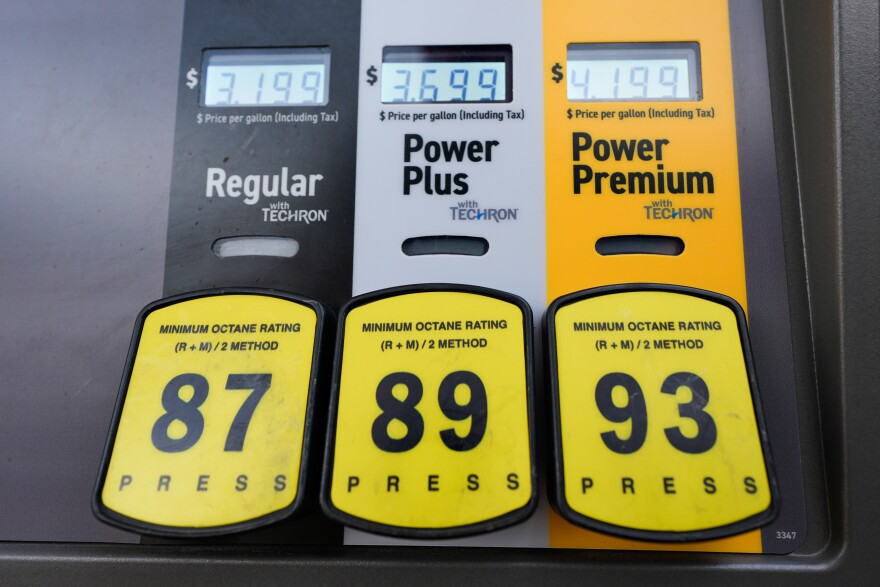
At the same time, gasoline prices have continued climbing. Fuel prices rose for the twelfth consecutive day, reflecting the rapid increase in crude oil costs.
When crude oil prices increase, refineries and distributors typically pass those costs along the supply chain. As a result, consumers often see higher prices at fuel stations shortly after oil prices surge.
Consequently, the rise in Oil Prices $100 could begin affecting household budgets and transportation costs across multiple economies.
Higher gasoline prices can also influence consumer spending. When households spend more on fuel, they often reduce spending in other areas of the economy.
For this reason, energy price increases frequently create ripple effects across industries such as retail, travel, and logistics.
Meanwhile, global stock markets reacted negatively to the energy market surge. Investors responded to the geopolitical uncertainty by reducing exposure to riskier assets.
Equity markets in several regions recorded declines during the same period when Oil Prices $100 crossed the symbolic threshold.
Stock markets often react cautiously to geopolitical tensions, especially when those tensions involve major oil-producing regions.
The Middle East remains a crucial hub for global energy supply. Therefore, any instability in the region can influence investor sentiment worldwide.
As tensions escalated, investors shifted focus toward the potential economic consequences of prolonged conflict.
The increase in Oil Prices $100 has revived concerns about inflation. Central banks across many economies have spent recent years attempting to stabilize prices after previous inflation shocks.
However, sustained increases in oil prices could complicate those efforts.
Energy costs influence many sectors of the economy. Transportation companies, manufacturers, and logistics providers depend heavily on fuel. When oil prices rise, those industries often experience increased operating costs.
These higher costs may eventually reach consumers through higher prices for goods and services.
Because of this relationship, the return of Oil Prices $100 could force policymakers to reconsider economic forecasts.
Financial markets typically respond quickly to energy price movements because they influence inflation expectations.
If oil prices remain elevated for an extended period, central banks may face difficult decisions regarding interest rates and economic stimulus policies.
Investors are therefore watching developments in the Middle East closely.
Markets often react strongly to geopolitical developments, particularly when conflicts threaten strategic energy corridors.
For example, key shipping routes in the region carry large volumes of oil destined for international markets. Any disruption to those routes could reduce supply and push prices even higher.
As a result, traders now view Oil Prices $100 as a signal of potential market volatility rather than simply a short-term fluctuation.
Energy analysts also note that global demand for oil remains strong. Economic activity across several regions continues to support high levels of fuel consumption.
When strong demand meets supply uncertainty, prices often rise quickly.
In this environment, the return of Oil Prices $100 highlights how sensitive energy markets remain to geopolitical risk.
For investors, the situation presents both risks and opportunities.
Energy companies may benefit from higher oil prices because rising crude values often increase revenue for producers.
However, other sectors may face pressure due to higher operating costs.
Therefore, financial markets will likely remain sensitive to developments related to the conflict and its potential impact on oil supply.
For now, the reappearance of Oil Prices $100 signals a period of uncertainty for global markets. As geopolitical tensions continue and investors assess the broader economic impact, energy prices and equity markets may remain volatile in the weeks ahead.