The story of Seneca Falls Women’s Rights history begins in the summer of 1848 when hundreds gathered in a small chapel in upstate New York. Their goal was simple but revolutionary: demand equal rights for women in a society that denied them political and social power.
That meeting, known as the first Women’s Rights Convention, transformed the town of Seneca Falls into a historic landmark. Today, visitors travel from across the United States to explore the place where the modern women’s rights movement first took shape.
Seneca Falls Women’s Rights Convention
The Seneca Falls Women’s Rights movement formally began when about 300 people assembled at the newly built Wesleyan Chapel. During that meeting, activists adopted a document called the Declaration of Sentiments.
The document borrowed language from the Declaration of Independence but made a crucial change. It declared that all men and women are created equal. This bold statement challenged the political and legal barriers women faced at the time.
The convention brought together influential reformers including Elizabeth Cady Stanton and Lucretia Mott. Their work helped ignite a national campaign for women’s voting rights and social equality.
What to See at Seneca Falls Women’s Rights Park
Today the Seneca Falls Women’s Rights park preserves several historic locations linked to the movement. The sites spread across the towns of Seneca Falls and Waterloo in New York.
Visitor Center
The Visitor Center introduces guests to the history of the women’s rights movement. Inside, visitors can see the “First Wave Exhibit,” which features bronze statues honoring early activists.
The center also includes displays with artwork, historic documents, and photographs that explain how the fight for women’s equality developed alongside the abolitionist movement.
Wesleyan Chapel
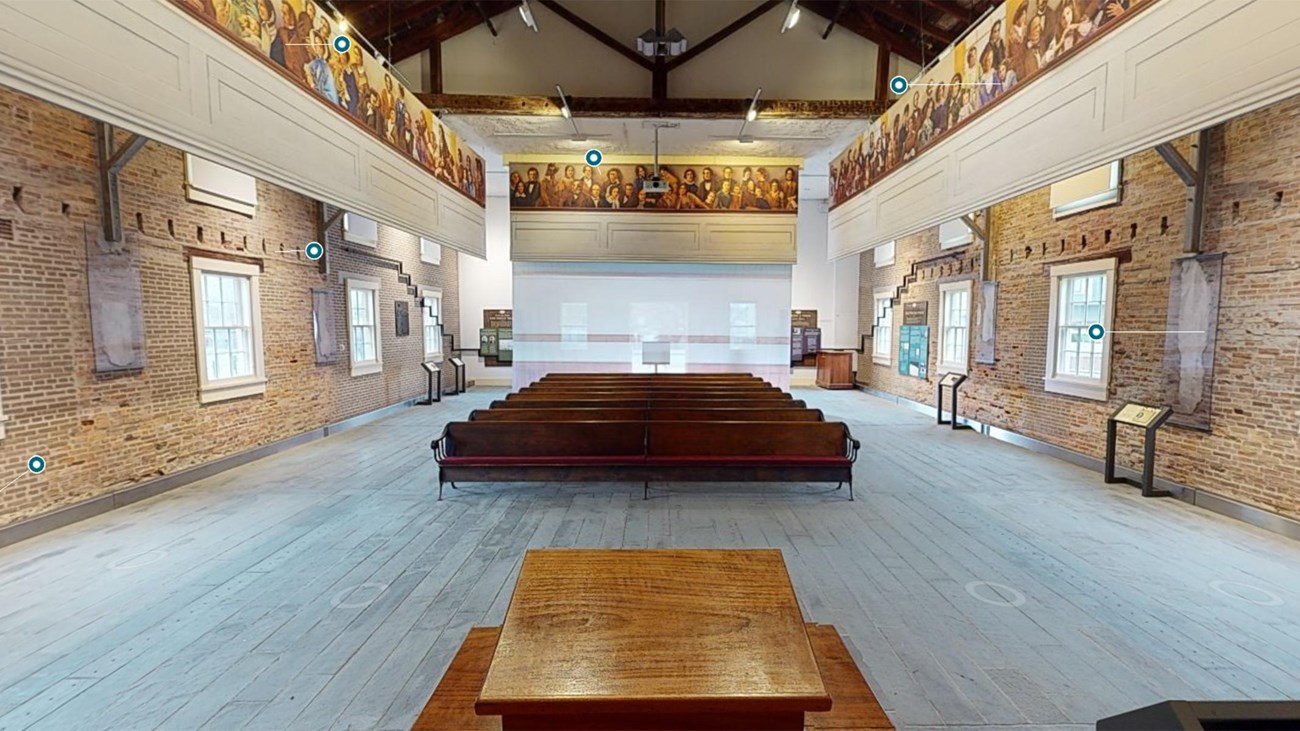
The Wesleyan Chapel remains the most symbolic location in the park. Visitors can sit in the pews where reformers debated the rights of women in 1848.
At the front of the chapel, the Declaration of Sentiments is displayed. Standing there offers a powerful reminder of the moment when the call for gender equality gained national attention.
Elizabeth Cady Stanton House
Another important stop is the home of Elizabeth Cady Stanton, one of the movement’s leading voices. Stanton often referred to the house as “Grassmere” and sometimes called it the “Center of the Rebellion.”
The restored property gives visitors a glimpse into the personal life of one of the most influential figures in women’s rights history.
M’Clintock House
Located in nearby Waterloo, the M’Clintock House played a key role in preparing for the convention. Mary Ann and Thomas M’Clintock hosted discussions there that helped shape the Declaration of Sentiments.
The house also served as part of the Underground Railroad, linking the women’s rights movement with the broader struggle against slavery.
Hunt House
The idea for the women’s rights convention was first discussed at the Hunt House. During a tea gathering, several reformers began discussing the injustices women faced in American society.
Those conversations eventually led to the decision to organize the historic Seneca Falls meeting.
Declaration Park and Waterwall
Visitors can also stop at Declaration Park, a small green space between the Visitor Center and the chapel. The park features a striking waterwall engraved with the full text of the Declaration of Sentiments and the names of those who signed it.
Touching the engraved words offers a powerful connection to one of the most important documents in American social reform.
Local Culture Around Seneca Falls Women’s Rights Sites
After exploring the historic sites, many visitors explore local shops along Fall Street. One well known stop is a gift store that focuses on handmade products created by women artisans.
The shop features crafts, jewelry, and clothing celebrating women’s creativity and entrepreneurship. Visitors can also find souvenirs connected to the famous film It’s a Wonderful Life. Many people believe the movie’s fictional town, Bedford Falls, was inspired by Seneca Falls.
Planning Your Visit
Spring and fall are considered the best times to visit the Seneca Falls Women’s Rights park. During these seasons the weather is comfortable and the crowds are smaller.
Summer also attracts many visitors because the park hosts anniversary events celebrating the historic 1848 convention.
The historical park remains open throughout the year and admission is free. Visitors will find a small parking area located behind the Visitor Center, making it easy to explore the area on foot.
More than a century after the first convention, Seneca Falls Women’s Rights sites continue to remind visitors how a small gathering in a modest chapel sparked a global movement for equality.