A landmark ruling by Panama’s highest court has injected fresh momentum into the United States’ efforts to curb China’s influence in the Western Hemisphere, reshaping the geopolitical contest surrounding one of the world’s most strategic waterways.
The decision, which invalidated a long-standing port concession held by a Hong Kong-based conglomerate, has been widely interpreted as a strategic win for President Donald Trump, whose administration has made the Panama Canal a focal point of its broader competition with Beijing.
Supreme Court Voids Key Port Concessions
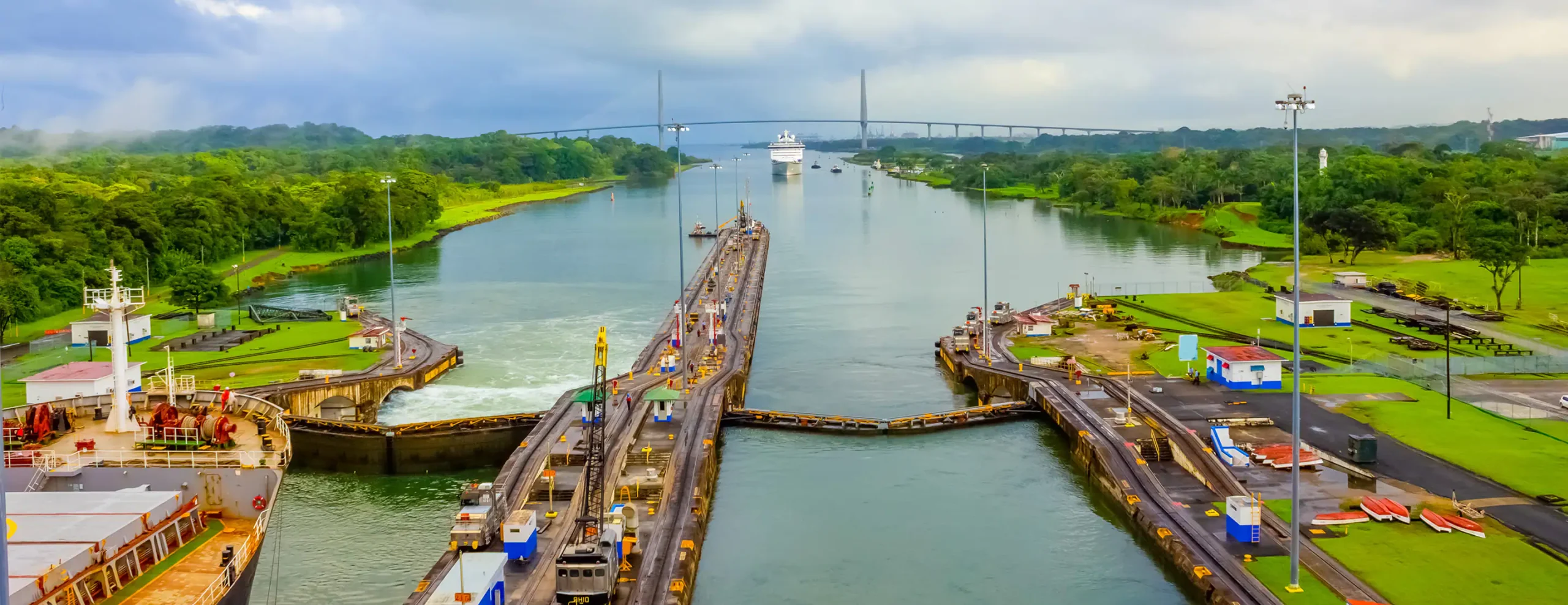
Panama’s Supreme Court ruled that the concession allowing Panama Ports Company to operate major ports at both ends of the canal violates the country’s constitution.
The subsidiary, owned by CK Hutchison, has managed the port of Balboa on the Pacific side and Cristóbal on the Atlantic side since the 1990s. In a brief statement, the court said the contractual framework underpinning the arrangement lacked constitutional validity.
Judges said they reached the decision after extensive deliberations. They did not outline how Panama would transition control of the ports or whether interim operators would be appointed.
Markets React as CK Hutchison Shares Slide
Investors reacted quickly to the ruling.
Shares of CK Hutchison fell nearly 5% in Hong Kong trading, underperforming a broader market that also closed lower. Analysts said the decline reflected uncertainty over the company’s global port portfolio and potential legal exposure.
The ruling also clouds the future of a proposed $23 billion deal involving the sale of 43 ports worldwide to a consortium led by BlackRock and Mediterranean Shipping Company. That transaction had already drawn geopolitical scrutiny before the court’s decision.
Trump Administration Sees Strategic Opening
U.S. officials view the ruling as aligning with Washington’s long-standing concerns over Chinese-linked entities operating near the canal.
The Trump administration has repeatedly argued that China’s commercial footprint in Panama carries national security implications. Trump himself previously claimed that the canal was effectively under Chinese control, a charge Panama has denied.
Roughly a year ago, Trump threatened to reclaim control of the canal, calling it vital to U.S. interests. His administration has since framed the issue as central to maintaining American dominance in the hemisphere.
Canal Control and U.S. Security Doctrine
Trump has tied the Panama Canal dispute to a broader regional strategy.
Earlier this month, he invoked a revamped interpretation of the Monroe Doctrine while outlining his national security vision. He said the United States would no longer tolerate strategic rivals gaining influence in the Americas.
The remarks followed a controversial U.S. operation targeting Venezuelan President Nicolás Maduro, reinforcing the administration’s aggressive posture in the region.
Panama Ports Company Pushes Back
Panama Ports Company rejected the court’s ruling, arguing that it undermines legal certainty.
In a statement, the company said the decision contradicts the legal framework governing port concessions. It warned that invalidating the contract could disrupt port operations and threaten thousands of jobs tied directly and indirectly to canal commerce.
The company also said it reserves the right to pursue legal remedies, including potential international arbitration.
China Responds With Sharp Warning
Beijing responded swiftly to the decision.
A spokesperson for China’s Ministry of Foreign Affairs said the ruling contradicts Panama’s laws governing franchise approvals. The spokesperson added that Chinese companies would defend their interests through all available means.
China warned it would take necessary measures to protect the legitimate rights of its firms, signaling that the dispute could escalate beyond Panama’s borders.
Panama Canal at the Center of Global Trade
The Panama Canal remains one of the most critical arteries of global commerce, linking the Atlantic and Pacific oceans.
Any change in control or management of canal-adjacent infrastructure carries far-reaching consequences for shipping routes, energy transport, and military logistics. Analysts say even incremental shifts in governance can ripple across global supply chains.
Recent droughts and climate pressures have already strained canal operations, making stability a top concern for shipping companies and governments alike.
Legal Uncertainty Raises Broader Questions
The court’s ruling introduces significant uncertainty around foreign investment in Panama.
Legal experts note that the decision could prompt reviews of other long-term concessions. Investors may now question how Panama balances constitutional law with commercial agreements signed decades earlier.
For Washington, the ruling reinforces its narrative that strategic infrastructure must remain insulated from rival powers. For Beijing, it raises concerns about political risk facing Chinese-linked investments overseas.
As control of ports and passageways becomes increasingly politicized, the Panama Canal once again sits at the intersection of law, trade, and global power competition.