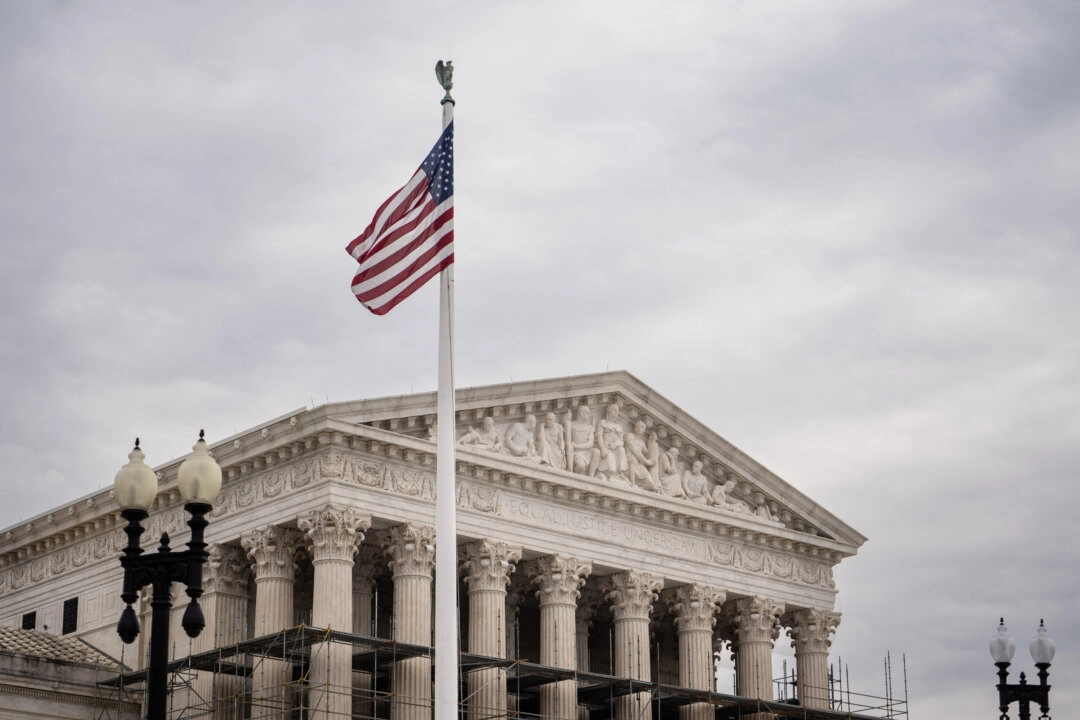
The United States Supreme Court is considering a case that could reshape how public agencies are sued across state lines. At the center of the dispute is whether New Jersey Transit, the Garden State’s public transportation provider, can be sued in other states for accidents that occur beyond New Jersey’s borders.
The high court heard arguments on January 14, examining whether constitutional principles of sovereign immunity shield the transit agency from lawsuits filed in neighboring states such as New York and Pennsylvania. A final ruling is expected by the end of June, and legal experts say the decision could have nationwide implications for state-run authorities operating across state boundaries.
Conflicting Rulings in New York and Pennsylvania
The case stems from two separate lawsuits filed after alleged accidents involving New Jersey Transit buses operating outside the state. In one case, New York resident Jeffrey Colt sued the agency in New York state court in 2017, claiming he was struck by a transit bus. In another, Pennsylvania resident Cedric Galette filed suit in Pennsylvania state court following a 2018 accident.
State courts reached opposite conclusions. A Pennsylvania court ruled that New Jersey Transit could not be sued there because it is an arm of the state of New Jersey and therefore protected by sovereign immunity. However, a New York court ruled that the agency could be sued, finding it sufficiently independent from the state.
The Supreme Court agreed to hear both cases together—New Jersey Transit Corporation v. Colt and Galette v. New Jersey Transit Corporation—to resolve the legal split.
What Is Sovereign and Interstate Sovereign Immunity?
Sovereign immunity is a long-established legal doctrine that prevents governments from being sued without their consent. In the United States, state sovereign immunity is rooted in the Eleventh Amendment to the Constitution.
Closely related is interstate sovereign immunity, which generally bars a state from being sued in another state’s courts unless it agrees to that jurisdiction. The key question before the Supreme Court is whether New Jersey Transit qualifies as an “arm of the state” entitled to that protection.
New Jersey Transit’s Argument
Representing New Jersey Transit, attorney Michael Zuckerman told the justices that the agency “looks a lot like a New Jersey state agency” and should therefore only be sued where New Jersey has consented—within its own courts.
He argued that the agency was deliberately structured to operate within the state’s executive branch, noting that the governor has veto power over its actions. According to Zuckerman, this structure places New Jersey Transit squarely within the protections of sovereign immunity.
“The Supreme Court has never suggested that states experiment with efficiency at peril to their sovereignty,” he said, defending the state’s decision to incorporate the agency while maintaining close control over its operations.
Skepticism From the Bench
Several justices pressed New Jersey Transit on why the state chose to create the agency as a corporation if it intended it to enjoy full sovereign immunity.
Justice Ketanji Brown Jackson questioned whether incorporation was meant to distance the state from liability. Justice Sonia Sotomayor noted that the court has previously ruled that corporate form can weigh against treating an entity as the state itself.
She emphasized that formal legal liability, not informal ties or indemnification, has remained central in determining whether an entity is entitled to immunity.
Biden v. Nebraska and the MOHELA Comparison
Justice Elena Kagan pointed to the court’s 2023 decision in Biden v. Nebraska, which found that the Missouri Higher Education Loan Authority (MOHELA) was an arm of the state of Missouri.
Kagan suggested that the ruling could support New Jersey Transit’s position, noting similarities between MOHELA and New Jersey Transit as public corporations with sue-and-be-sued authority.
Zuckerman agreed, calling the decision “very good” for his client.
Plaintiffs Push Back
Michael Kimberly, attorney for the plaintiffs, argued that New Jersey forfeited interstate sovereign immunity when it created New Jersey Transit as a separate legal entity.
He told the court that for more than two centuries, Supreme Court precedent has held that such entities do not automatically share in a state’s immunity simply because they serve public purposes.
Justice Clarence Thomas pressed Kimberly on whether MOHELA’s status undermined that argument. Kimberly responded that Biden v. Nebraska dealt primarily with standing—the right to sue—not sovereign immunity.
Why the Case Matters Nationally
The outcome could affect public agencies across the country, particularly those that operate across state lines, such as transit authorities, port authorities, and public utilities.
If the court sides with New Jersey Transit, similar agencies may gain stronger immunity from out-of-state lawsuits. If it rules against the agency, states could face increased legal exposure when their public entities operate beyond state borders.
For now, the justices appear divided, signaling a closely watched decision that could redefine the balance between state sovereignty and accountability.